Packing for a weekend trip sounds like it should be the easy part of travel planning, yet it’s often where people lose the most time — overpacking “just in case,” second-guessing shoe choices, and arriving with an outfit for every scenario except the one they actually needed. A short trip doesn’t require a complicated wardrobe. It requires a smart, flexible system that covers real situations without the extra suitcase weight.
This guide breaks down how to plan weekend travel outfits that are comfortable, versatile, and actually get worn — based on the principles experienced travelers and stylists rely on again and again.
Start With the Itinerary, Not the Wardrobe
The biggest packing mistake happens before a single item goes into the suitcase: packing based on your closet instead of your actual plans. A weekend that includes a hike, a nice dinner, and a lot of walking around a new city calls for a completely different set of clothes than a weekend spent mostly at a beach resort or visiting family.
Before packing anything, it helps to sketch out — even loosely — what each day and evening will realistically involve:
- How much walking or physical activity is expected
- Whether any part of the trip has a dress code (a nice restaurant, an event, a wedding-adjacent gathering)
- What the weather is likely to do, including evening temperature drops
- Whether you’ll have access to laundry or need every piece to be reworn
This five-minute exercise does more to prevent overpacking than any packing list template, because it grounds every clothing decision in something concrete rather than “what if.”
Build a Capsule, Not a Suitcase Full of Options
For a short trip, the goal isn’t packing an outfit for every possible mood — it’s packing a small set of pieces that combine into several different outfits. This is the same capsule-wardrobe thinking that works at home, just compressed into a much smaller timeframe.
A simple structure that works for most two- to four-day trips:
- One neutral base color (black, navy, tan, olive) that most pieces build from
- One accent color that shows up in two or three pieces to tie everything together
- 2–3 tops that can each be worn with more than one bottom
- 1–2 bottoms (jeans or trousers, plus a skirt or shorts depending on climate)
- One layering piece (a jacket, cardigan, or blazer) that works with everything else
- One “just in case” piece for an unplanned nicer occasion — a slightly dressier top or dress that packs flat
Sticking to a tight color story means almost everything can be mixed and matched, which cuts the packed item count dramatically without cutting outfit options.
If you want read more Fashion related article visit:> STYLE BLOOMING
Prioritize Versatility Over Statement Pieces
A common travel-packing trap is throwing in a few bold, eye-catching pieces because they photograph well, only to realize they don’t pair with anything else in the suitcase. For a weekend trip, versatile pieces earn their spot far more reliably than one-off statement items.
A quick test before packing anything: can this piece be worn at least two different ways with what else is already going in the bag? If the honest answer is no, it’s worth reconsidering, unless it’s specifically for a single planned event.
This doesn’t mean travel outfits have to be boring — it just means the personality comes through accessories and one or two intentional pieces, rather than every single item trying to make a statement.
Shoes: Pack Fewer, Choose Smarter
Shoes are usually the heaviest and most space-consuming items in a suitcase, and also the easiest category to overpack. For most weekend trips, three pairs cover nearly every scenario:
- A comfortable walking shoe for daytime activity and travel days
- A versatile flat or low heel that can move between casual and slightly dressed-up settings
- A pair specific to one planned activity (sandals for a beach day, boots for a hike), only if the itinerary actually calls for it
Choosing shoes in colors that match your outfit’s neutral base — rather than one pair per outfit — keeps this category from taking over the entire suitcase.
Layer for Temperature Swings, Not Just the Season
Weekend trips often involve more temperature variation than people plan for — a warm afternoon followed by a cool evening, an air-conditioned restaurant after a hot day outside, or an early morning flight before the day warms up. Building in layers solves this without requiring separate cold-weather and warm-weather outfits.
A lightweight cardigan, a packable jacket, or a scarf that doubles as both an accessory and a layer are efficient additions that solve multiple problems at once. The goal is a base outfit that works on its own in comfortable weather, with one or two additions that adapt it up or down as needed.
Dressing for the “In-Between” Moments
A lot of travel outfit planning focuses on big, obvious moments — the dinner out, the sightseeing day — but overlooks the in-between stretches: the airport, the car ride, the early check-in before a hotel room is ready. These moments deserve some thought too, since they usually make up a large chunk of actual trip time.
A reliable travel-day outfit tends to work best when it’s comfortable enough for hours of sitting or walking, easy to layer for changing indoor and outdoor temperatures, and made from fabric that doesn’t wrinkle badly after being packed or worn for an extended stretch. Getting this one outfit right removes a surprising amount of stress from the actual travel days.
Accessories: The Easiest Way to Multiply Outfits
Because weekend trips work best with a limited number of clothing pieces, accessories become the main tool for creating variety without adding suitcase weight. A few well-chosen accessories can make the same three or four outfits feel distinct across several days:
- A statement necklace or earrings to dress up a simple top
- A patterned scarf that adds color and can double as a light layer
- A crossbody bag for casual days and a slightly dressier bag for evenings
- Sunglasses and a hat that serve both function and style for daytime activities
Packing two or three of these rather than an entire jewelry box keeps the outfit-multiplying effect without the extra bulk.
A Simple Weekend Packing Framework
For travelers who want a repeatable system rather than rethinking the suitcase from scratch every trip, this framework covers most short getaways:
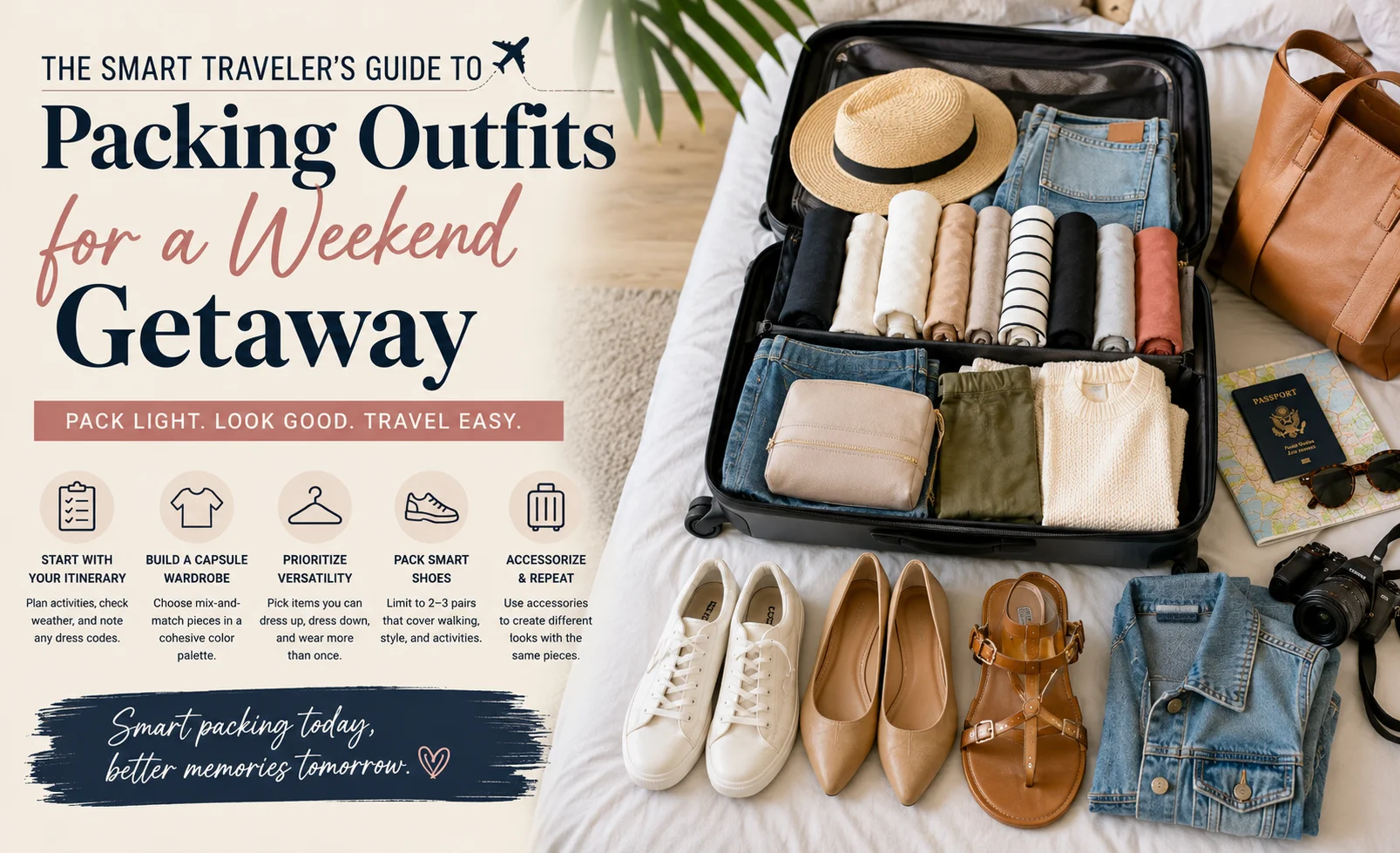
- Check the itinerary and weather first, and let both dictate the clothing categories you actually need.
- Pick one neutral base and one accent color, and build every piece around that palette.
- Limit tops and bottoms to pieces that mix with at least two other items.
- Choose shoes by function, not by outfit, capping the count at two or three pairs.
- Add one layering piece and a small accessory set to multiply outfit options without adding much weight.
Running through these five steps takes a fraction of the time that ad hoc packing usually does, and tends to leave far less unworn clothing at the bottom of the suitcase by the end of the trip.
Adjusting the Capsule by Destination Type
While the core packing framework stays the same, small adjustments make a noticeable difference depending on where the weekend trip is headed.
City breaks: Comfortable walking shoes matter more here than almost anywhere else, since city weekends often mean hours of walking between neighborhoods, museums, and restaurants. A structured bag that’s still practical for walking, one dressier top for evening, and layering pieces for indoor-outdoor temperature swings round out a solid city capsule.
Beach or coastal weekends: Breathable fabrics and easy-care pieces take priority, since sand, humidity, and sun exposure are harder on clothing than most other trip types. Packing one cover-up that doubles as a light dress, sandals that work both on the beach and for a casual dinner, and a sun hat that pulls double duty as both function and accessory keeps this capsule efficient.
Mountain or cooler-weather getaways: Layering becomes the whole strategy rather than just a backup plan. A base layer, a mid-weight layer, and one weatherproof outer layer flex across a wider temperature range than a single heavy coat, while also packing down smaller.
Visiting family or a low-key home base trip: These trips often need less “outfit planning” and more comfort-focused basics, but it’s still worth packing one slightly elevated outfit in case plans shift toward a nicer dinner or unplanned outing.
Carry-On Packing: Making the Capsule Fit
For weekend trips, packing everything into a carry-on isn’t just about avoiding checked bag fees — it also forces the kind of disciplined, versatile packing this guide is built around. A few habits make carry-on-only travel realistic even with a reasonably complete capsule:
- Roll rather than fold most casual pieces, which saves space and reduces wrinkling for knits, t-shirts, and casual trousers.
- Wear the bulkiest items while traveling — the jacket, the heavier shoes — rather than packing them, freeing up significant suitcase space.
- Use packing cubes or compression bags to separate outfit categories and keep the smaller capsule organized rather than becoming a jumbled pile by day two.
- Limit toiletries and extras ruthlessly, since clothing space is usually the easier category to control, but toiletry bags are where extra weight quietly accumulates.
A well-planned capsule wardrobe and a disciplined carry-on approach tend to reinforce each other — the tighter the outfit system, the easier the packing, and vice versa.
Common Packing Mistakes Worth Avoiding
A few patterns come up repeatedly with weekend travel outfits, even among otherwise organized packers:
- Packing a new outfit for every single day. Repeating pieces with different accessories is far more practical than aiming for a completely new look daily.
- Overpacking for “just in case” scenarios. Unless an event is confirmed, a single flexible piece usually covers unexpected dress-up moments better than multiple dedicated outfits.
- Choosing style over comfort for travel days. An uncomfortable outfit on a long travel day tends to affect the whole trip’s start, regardless of how good it looks.
- Ignoring laundry access. A two-night trip with laundry available at the destination needs a very different packing list than one without it.
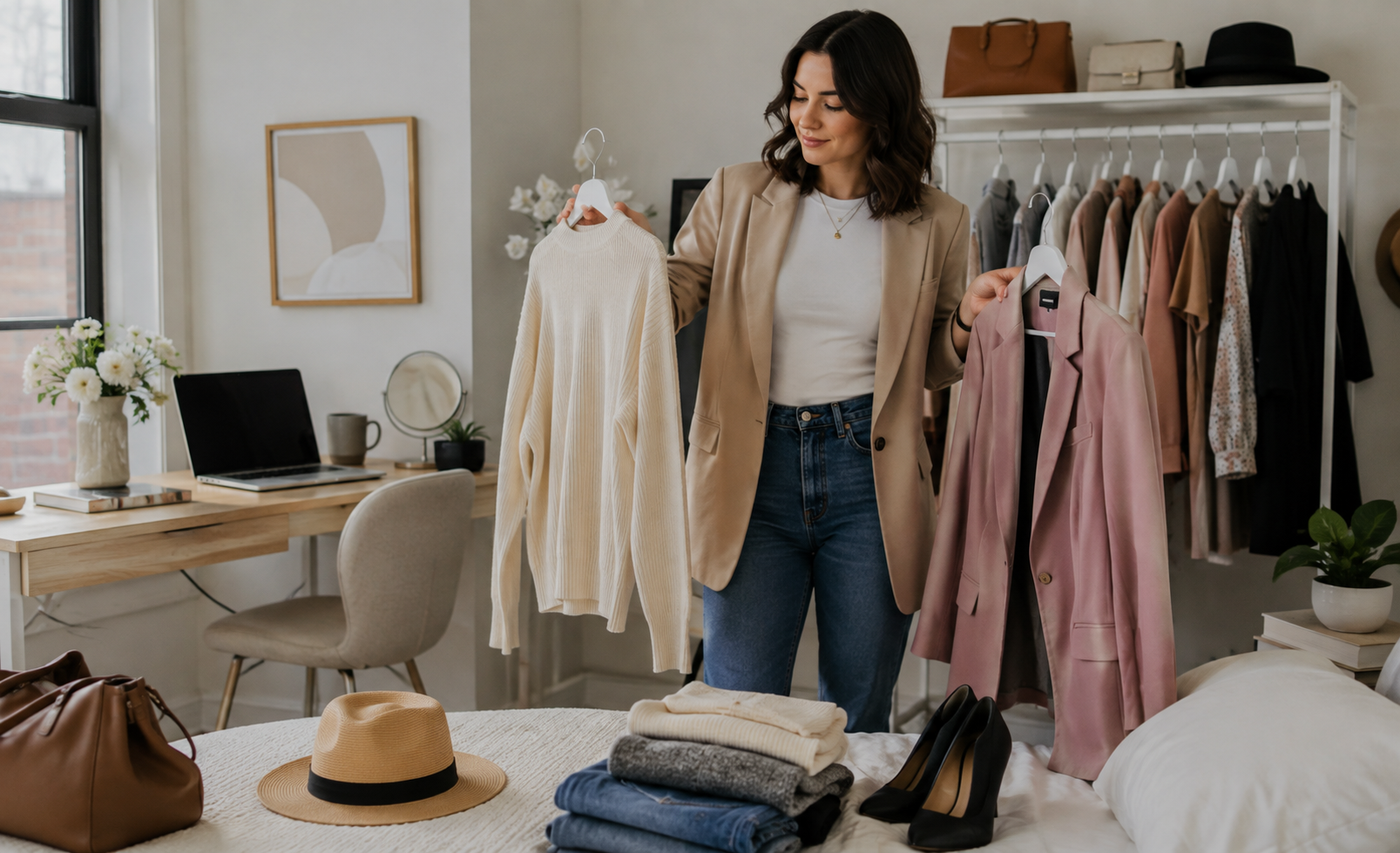
- Forgetting to test the capsule at home. Trying on the planned combinations before packing catches fit or coordination issues while there’s still time to swap pieces.
Frequently Asked Questions
How many outfits do I really need for a three-day weekend trip? Fewer than most people pack. A tight capsule of five to seven mix-and-match pieces typically covers a three-day trip comfortably, especially when accessories are used to add variety between days.
What’s the best way to avoid a heavy suitcase? Focus on a limited color palette and versatile pieces rather than packing separate outfits for every planned activity. Shoes and layering pieces tend to add the most weight, so keeping those categories tight makes the biggest difference.
Should I pack for the destination’s weather or bring layers regardless? Both. Check the forecast for the base expectation, but pack at least one adaptable layer regardless of season, since travel days and evenings often run cooler than daytime weather suggests.
How do I keep travel outfits from looking repetitive in photos? Rotate accessories, layering pieces, and hairstyles between days rather than changing the entire outfit. A well-chosen scarf, jacket, or piece of jewelry can make the same base pieces feel distinct.
Is it worth packing one dressier outfit even if nothing formal is planned? Generally yes, especially for trips with any unpredictability. A single dressier piece that packs flat and pairs with existing shoes and accessories covers unplanned dinners or invitations without needing a dedicated outfit.
Final Thought
Packing well for a weekend trip isn’t about bringing more options — it’s about bringing the right, flexible ones. A tight color palette, a handful of versatile pieces, and a small set of multiplying accessories will almost always outperform an overstuffed suitcase built around “just in case” thinking.
For outfit-by-outfit breakdowns suited to specific trip types — city breaks, beach weekends, and cooler-weather getaways — Style Blooming’s weekend travel outfit ideas guide walks through complete looks and packing notes for different kinds of short trips.