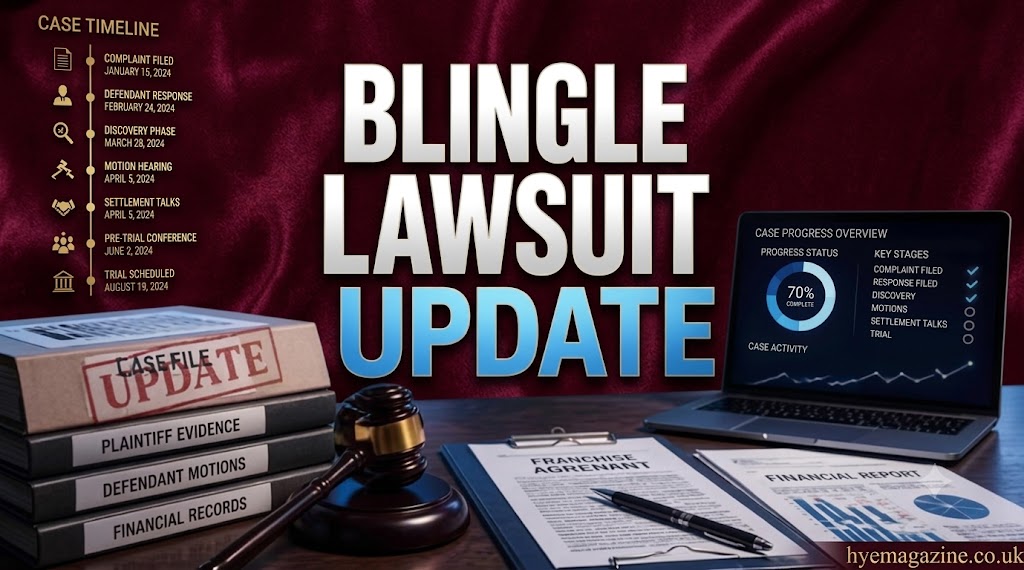
The Blinglelawsuit has been widely discussed in franchise legal circles due to serious allegations raised by franchise owners against the Blingle exterior lighting franchise system and its parent company structure. Many people searching for “Blingle lawsuit open now” want to know whether there is currently an active court case, a class action they can join, or ongoing public litigation.
As of the most documented federal dispute, the case was filed in 2023 and later dismissed in 2024 based on contractual dispute resolution clauses. However, discussions around the lawsuit continue because franchisees still raise concerns, and some disputes may have shifted into private arbitration rather than public court proceedings.
This article explains the full situation, current status, allegations, and what “open now” really means in legal terms.
What Is the BlingleLawsuit?
The Blinglelawsuit refers to a federal franchise dispute involving multiple franchisee-owned businesses operating under the Blingle lighting franchise system. The case was filed in the United States District Court and included several franchisee LLCs who collectively challenged the business practices of the franchise system and its parent company.
The lawsuit focused on concerns about how the franchise system was marketed, how financial expectations were presented, and how operational support was delivered after franchise purchase.
Although it is commonly referred to as a single “Blinglelawsuit,” it is actually a group dispute involving multiple franchise owners bringing similar complaints together.
Is the BlingleLawsuit Open Now?
At present, the public federal case is not active in court.
The lawsuit was dismissed by the court because the franchise agreements contained mandatory dispute resolution clauses. These clauses required franchisees to resolve disputes through mediation or arbitration before filing a lawsuit in federal court.
Because the court enforced this requirement, the case did not proceed to trial and is no longer open as a public federal lawsuit.
However, this does not necessarily mean all disputes are resolved. It means any remaining issues are expected to be handled privately through arbitration rather than through the public legal system.
Why the Lawsuit Was Filed
The lawsuit was filed after several franchise owners began reporting operational and financial difficulties after joining the Blingle franchise system. These franchisees claimed that their actual business experience did not match what they were told during the franchise sales process.
They believed that important expectations regarding revenue potential, support systems, and business performance were not aligned with reality once operations began.
This led a group of franchise owners to collectively take legal action against the parent company.
Key Allegations Made in the Lawsuit
Financial Misrepresentation Claims
One of the central allegations was that franchisees were given financial projections that did not accurately reflect real-world performance. Franchise owners claimed that they were shown optimistic revenue expectations that influenced their decision to invest.
These projections, according to the plaintiffs, created an impression that the business would reach profitability faster and more consistently than what actually occurred in practice.
Lack of Franchise Support
Another major complaint involved operational support after franchise purchase. Franchisees claimed that once they joined the system, they did not receive the level of training, marketing support, or business guidance that was initially expected.
This included concerns about onboarding processes, lead generation support, and general business development assistance.
Business Model Concerns
Franchisees also raised concerns about the overall structure of the franchise system. They argued that the business appeared heavily focused on expanding franchise sales rather than strengthening existing franchise operations.
This led to claims that system growth may have been prioritized over franchisee success, although this was never proven in court.
Unexpected Costs and Operational Issues
The lawsuit also referenced concerns about additional operational costs that were not fully anticipated during the investment stage. These included vendor pricing differences, supply chain issues, and installation delays that impacted business performance.
Franchisees argued that these issues increased financial pressure after launch.
Company Response to the Allegations
The franchise system and its parent company denied the allegations and pointed to the signed franchise agreements as the governing legal framework.
They emphasized that all franchise owners agreed to dispute resolution clauses that require mediation or arbitration before any court case could proceed.
From their perspective, the franchisees did not follow the required contractual process before filing the lawsuit, which became a key legal issue in the case.
Court Decision and Dismissal
The federal court did not rule on whether the allegations were true or false.
Instead, the court focused on the franchise agreement terms and determined that:
- Disputes must go through mediation or arbitration first
- The lawsuit was filed before completing that process
- Therefore, the case could not proceed in federal court
As a result, the case was dismissed on procedural grounds.
This means the court never evaluated evidence related to the allegations themselves.
What “Dismissed” Actually Means
A dismissed lawsuit does not always mean a company is cleared of wrongdoing.
In this case, dismissal means the court did not hear the full case because of contract rules between the parties.
So, the key point is:
The lawsuit ended in court, but not through a final judgment on the facts.
Instead, the dispute was redirected to private resolution methods like arbitration.
Current Legal Status of Blingle Lawsuit
As of now, there is:
- No active federal court case
- No certified class action lawsuit
- No public trial ongoing
Any remaining disputes between franchisees and the company are expected to be handled privately.
This is why people searching “Blingle lawsuit open now” may find conflicting information online, but in legal terms, the public case is not active.
Why This Case Got Attention
The Blinglelawsuit gained attention because franchise disputes involving allegations of financial misrepresentation and support issues often raise broader concerns in the franchise industry.
It highlighted common tensions between:
- Franchise owners expecting high support
- Franchisors operating scalable systems
- Financial expectations vs real-world business outcomes
Even though the case was dismissed, the allegations sparked broader discussions about franchise transparency and accountability.
Are There Similar Lawsuits Against Related Companies?
The parent company structure has multiple franchise brands, and over time, franchisees in related systems have raised similar concerns about operational support and financial expectations.
However, each franchise system and legal case is separate, and no single active consolidated lawsuit currently exists against Blingle in public court records.
Key Takeaways from the BlingleLawsuit
The Blingle lawsuit provides several important insights:
First, franchise agreements are legally binding contracts that strongly control how disputes are handled.
Second, many franchise disputes never reach public trial because of mandatory arbitration clauses.
Third, dismissal does not automatically confirm or deny allegations; it often reflects procedural requirements.
Finally, franchise buyers must carefully review financial projections and support structures before investing.
Conclusion
The Blinglelawsuit is often misunderstood as an ongoing public legal battle, but in reality, the federal case has already been dismissed and is no longer active in court.
While serious allegations were made by franchisees regarding financial projections, support systems, and business structure, the court did not rule on those claims. Instead, the case was closed due to arbitration requirements written into franchise agreements.
Any remaining disputes are now expected to be handled privately rather than through the public court system.